Pages

Showing posts with label Faith Seeking Understanding. Show all posts

Tuesday, February 12, 2013

Randal Rauser interviews me on Faith Seeking Understanding

By Randal Rauser

(Cross-posted from here.)

About a year ago I received an emailed invitation from David Marshall, theologian, apologist and author of several books including The Truth Behind the New Atheism (Harvest House, 2007) to contribute an essay to an exciting new book he was editing called Faith Seeking Understanding: Essays in Memory of Paul Brand and Ralph D. Winter. It didn’t take much arm twisting for me to agree to join such an exciting project, especially when I heard the stellar line up of scholars contributing to the project.

Now that Faith Seeking Understanding is available I thought it would be a good time to invite David Marshall over to The Tentative Apologist for an interview to share his thoughts on this exciting book. So here it is.
* * *
RR: David thanks for agreeing to do this interview. I’d like to start with two questions, one relating to the title and the other to the subtitle. Let’s begin with the subtitle which reads “Essays in memory of Paul Brand and Ralph D. Winter.” Who were Paul Brand and Ralph Winter and what prompted you to solicit a collection of essays in their memory?

Wednesday, December 12, 2012

A review and an interview

Last Wednesday, Tom Gilson, one of the editors of True Reason, posted a review of our new book Faith Seeking Understanding at his popular "Thinking Christian" blog. 

Today, one of the contributors to the book, the Canadian philosopher Randal Rauser (a philosophizing machine) posted an interview of the book's editor -- myself -- along with his own thoughts about the book.

That's all I have to report. 

So this post is little short, isn't it?  I was thinking of adding something off-the-wall about Heroditus and Plato, but maybe I'll save that for later.  I hope you'll follow the links and enjoy the stories. 

Happy 12/12/12.

Tuesday, December 11, 2012

Into the Jungle with Don Richardson

The following is an excerpt from Chapter Eight of Faith Seeking Understanding: "A Conversation with Don Richardson."  Those who have read Don's Peace Child may find this part of the interview especially interesting; there's lots more in the full interview.  There's still time to get the book by Christmas!  Order from us, and we'll gift-wrap it and mail to to your friend. 


Sunday, December 02, 2012

Miriam Adeney: Jesus and World Religions

Chapter Five of Faith Seeking Understanding is by Dr. Miriam Adeney, a well-known anthropologist and missiologist who teaches at Seattle Pacific University.  (I have taught in one of her classes.)  Miriam is the author of many book about world Christianity, including Daughters of Islam and Kingdom Without Borders: The Untold Story of Global Christianity, which I am presently reading.  She also teaches writing, and is herself -- as you will devine, shortly -- a wonderful writer.  This excerpt is from the first chapter in Part II of Faith Seeking Understanding, "Christ and Culture," which features four of the most fascinating writers I know on this intriguing topic.  I was delighted when Miriam agreed to share her thoughts on Christianity and world religions, and even more delighted when I first read her piece -- personal in tone, simple in style, informed by more than just book-learning, orthodox, yet warm and generous in its approach to non-Christian faiths


Buddhism:  Pain

Life hurts. I have suffered my share. Beyond personal losses, I am troubled by global hunger, HIV/AIDS, deaths in childbirth, and the abuse and denial of opportunities suffered by millions. On my mind now are Iranian Christians in prison. One pastor’s wife has just agonized through her fourth miscarriage while penned up in a cell. Sometimes the pain of the world seems too much to bear.   

Buddhism offers a way forward. If I can see that suffering is pervasive, if I can recognize that it is exacerbated by my own desires, and if I can learn to quench my desire, then peace will come.  In a nutshell, this sums up the first three “Noble Truths.”    My Thai friend Chaiyun Ukosakul, who became a Christian as an adult, summarizes what he was taught: “When I am angry, a tiger grows in my heart. But when I am enlightened, the tiger dies.”

Buddhism invites me to let things go. I must not cling to things, or relationships, or truths. I must hold everything in an open hand. It is all passing away anyway.  When I was in Indonesia a few years ago, I climbed up a huge stone structure called Borobodor.  Built more than a thousand years ago, this monument is as large as a city block. On the lower levels, the stone carvings were intricate, elaborate, lyrical, mellifluous retellings of episodes from the life of the Buddha. As I rose higher, I saw that the carving became sparer, until at the top the decoration was minimal. The closed domed pinnacle is said to contain emptiness. And that is the destination I seek, according to Buddhism. That is my goal as I shuffle off unnecessary desires.  When I no longer drag baggage around, how much lighter I will feel. 

Kukrit Pramoj, former Prime Minister of Thailand and also a famous novelist, once wrote a short Buddhist reflection on the gospel.[1] The main character in Pramoj’s story was a blind man named Bartimaus. Every day Bartimaus made his way to the outdoor market, tapping along with his walking stick. There he sat down. Vendors greeted him, and dropped a little food in his bowl. Birds sang. Children laughed. A woman named Ruth befriended him, and over time they fell in love.

Then Bartimaus heard that Jesus was coming through town, and that Jesus could heal the blind. “Have mercy on me, and heal my eyes!” Bartimaus called out.  

Jesus did.

Suddenly Bartimaus tranquil routine was shattered. He saw the sewage and the flies, the vendors’ faces lined with weariness and resentment, the children dressed in rags, their skin pocked with sores. Ruth had been through a terrible fire, he knew. Now he saw the gross burn that oozed where her face should have been, and could not stand to look at her.

Later he saw Jesus crucified. Then he fell to his knees and cried, “Oh God, give me back my blindness!”

This is a Buddhist response to the gospel, according to the Kukrit Pramoj. At bottom, life is ugly. It is like a muddy pond. We can’t do much about the mud. But we can aim to shoot up from the bottom like water lilies and lie clean on the top.

That appeals to me. If there were no God, or if God had not reached out to us, I might be a Buddhist. The faith offers a way to live with some degree of peace in a painful world.

But the amazing news is that there is a God, and he has cared so strongly for us that he chose to walk with dusty feet right to the painful bloody cross, where he died and later rose in power for us.

This is not tranquility. This is passion. Desire. Love. And it is what makes my own love possible. I cannot manufacture love on my own. But I can receive it, and pass it on.

Deep in my heart I sense that I am not just a candle flame, or a drop of water, or a temporary psychophysical event, which are common Buddhist metaphors for human beings. Nor do those images describe the people around me. We have lasting value.  Jesus told a story to make that point. In this parable, a shepherd rounded up ninety-nine sheep. Just one sheep was missing. Yet the shepherd went out into the dark and the cold to search for the one who was lost. That one sheep mattered. Jesus made it clear that every one of us counts. Each person is important.

I think also of a Japanese haiku poet named Issa. Although he had several children, they died, one after another. When the neighbors came to comfort him, they offered a bit of Buddhist philosophy: “After all,” they said to Issa, “this is a world of dew.”

What did they mean?  Dew appears on the grass in the morning,  then disappears. Our children arrive, and later they may disappear. None of this should upset us. That’s life.

But when Issa was alone, he wrote a poem:

The world of dew
Is a world of dew
And yet!  And yet! . . .

**********************************************************************
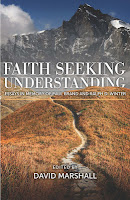
 
Faith Seeking Understanding makes a great Christmas gift, for students, missionaries, pastors, or non-Christian friends.  The four sections of the book -- "Tutors," "Christ in Culture," "Christ in History," and "Christ in Science and Philosophy" -- join some of the most thoughtful Christians in the world today, to share their experiences of seeking truth in and through sincere Christian faith.  I like to explain the theme of the book by paraphrasing Martin Luther: "Love God, and think boldly!"

Unfortunately there are almost only two ways to get this book by Christmas.  You can order the book directly from William Carey Library.  Or you can drop a check in the mail for $16 (including postage, add $10 for any of my other books as well!) to Kuai Mu Press / PO Box 403 / Fall City, WA 98024, and I will do my best to get it to you with time to spare -- or wrap it and send it directly to a friend (in the US, that is)!  (I should add a third way -- Dr. Adeney's husband, Michael Adeney, is also selling the book through his Harvest - Logos bookstore, which is one of the best sources I know for missions-related books.  The book should become more widely available in early 2013.) 


[1] 1.Kukrit Pramoj, “The Hell Which Heaven Forgot,” Practical Anthropology, May-June, 1966.
 

Tuesday, November 13, 2012

Ralph Winter: Apostle of holistic Christianity.

Dr. Greg Parsons, Executive Director of the US Center for World Missions, contributed a fascinating biographical sketch of Ralph Winter to our new book, Faith Seeking Understanding: Essays in Memory of Paul Brand and Ralph D. Winter.  I especially appreciated what Parsons said about Dr. Winter's love of learning, his passionate quest for deeper and holistic understanding of the patterns of life from a Christian perspective, a quality in Dr. Winter that I had the chance to observe, as well.  The following exerpt explains how that quality led to the creation of the Perspectives course, in which I and a few other contributors to Faith Seeking Understanding sometimes teach. 

As a student Winter observed that Christians seemed to avoid the sciences, and scientists avoided issues of faith . . . He had learned at Caltech about the academic achievements of great scientists such as Isaac Newton, Michael Faraday, William Thompson (Lord Kelvin), James Clerk Maxwell and Sir Humphrey Davy.  But Caltech did not mention that each of them were also men of faith. He discovered to his surprise that  Newton had spent twenty years studying the life of the apostle Paul. Faraday was an ordained preacher who taught from the Bible every Sunday . . .

Why, he wondered, was this separation so pervasive?  Even when science was taught at Christian colleges, there was no clear connection with the faith of those involved.

Ralph wondered, “What would a regular ‘secular’ history course look like if also studied from ‘God’s’ perspective?” He had surmised that fifteen out of seventeen Evangelical students were in secular schools. He decided to prepare history lessons from a Christian perspective and meet with a handful of willing students at USC each week.  Winter learned a great deal from this experiment, and this led to an ongoing, as yet unfulfilled, vision to meld together faith and “secular” disciplines. Later he wrote:

God has given us two “books.” 1) the Bible which is a Book of Revelation, and 2) nature, which is His Book of Creation. He does not want us to slight either one. Yet the sad situation is that, in general, one major human tradition (the scientific community) is studying the second and despising the first, and another human tradition (the church community) is studying the first and ignoring the second. Yet, both are essential in understanding God and His will . . . The Bible itself affirms the second, ‘The heavens declare the glory of God and the firmament displays His handiwork (and) there is no speech or language where their voice is not heard.’
In many ways, this holistic view of Christian thought was an outworking of  Winter’s own expanding studies.  He attended seven different schools (including Cal Tech, Columbia, Cornell, and Princeton Seminary), and earned degrees in Civil Engineering, Teaching English as a Second Language, Linguistics, Anthropology, Mathematical Statistics, and finally Theology . . .
 
One of Winter’s best-known legacies, one that expresses the holistic passion by which Winter saw life, is the study course (and book) called Perspectives on the World Christian Movement.  Each week a different instructor exposes students to a broad range of experiences, ideas and insights, building off material in that week's reading.  Some students are still in high school, while others are senior citizens, businessmen or women, or people in full-time ministry.  In 2011, almost ten thousand students took the course at over 200 locations.

Winter believed in lifelong learning.  A little box from Amazon.com , sometimes not so little, would show up at his home every other day or so. The box would contain books on science, history, and other subjects.  Over one three month period, when Winter was 83, he acquired sixty new books this way!  The rate was about a book every other day for many years.


Postscript: Faith Seeking Understanding is a unique new book featuring insights from such Christian thinkers as Phillip Yancey, the eminent sociologist Rodney Stark, the great philospher Alvin Plantinga, Oxford historian of science Allan Chapman, anthropologist Miriam Adeney, eminent quantum physicist Don Page, and many other thoughtful people.  It's a lovely book, a great Christmas gift for all kinds of people, including pastors, students, missionaries, and non-Christians who want an intellectually-rewarding yet low-key, noncombatative approach to Christianity.  You can order the book either from William Carey Library, or from us. 

If you order from us, the price is $13, plus $3 shipping.  We are also offering a special deal this Christmas: just add $10 and no extra shipping, for any of my other books, or a total of $58 + $3 shipping, for all six.  This is a great package for students, pastors, or church libraries, maybe a bit much for a single non-Christian. 

Our mailing address is Kuai Mu Press / PO BOX 403 / Fall City, WA 98024


[1] Ralph D. Winter, “Ten Frontiers of Perspective”, a morning seminar, August 20, 1999, revised January 21, 2003, 8. (W1042.14

Monday, October 15, 2012

The Humility of Paul Brand

Pastor Paul
I continue introducing our new book, Faith Seeking Understanding, with a brief passage from Chapter Two, "The Contagious Humility of Paul Brand," by the Reverend Paul Smith.  Pastor Paul is Senior Pastor of Westside Presbyterian Church in Seattle, where Paul and Margaret Brand "co-labored" for many years.  That is where I had the opportunity to get to know the Brands a little -- my parents knew them better -- and love and respect them, like most others at Westside.  Pastor Paul is the author of several books himself, and is a skilful and insightful communicator. 

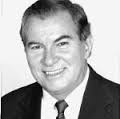
Dr. Brand probably wasn't
wearing a red tie, that day.
            Our first encounter with Dr. Paul Brand at Westside came on a summer day in 1986.  Vacation Bible School was going on, and there was plenty of distraction.  My secretary looked up from her work to see a slightly rumpled older couple standing politely in front of her.  “We’re Paul and Margaret Brand,” Paul said, “and we wonder if you can help us.”  The names did not register and her first thought was, “Oh my, I suppose this dear couple needs a handout.”  It was our church, however, that was about to receive a “handout,” one which has enriched us immeasurably.

            Paul and Margaret had just retired and were moving into a small cottage on a bluff overlooking Puget Sound about a mile from our church.  It became my privilege to become their pastor – Paul’s for the next 17 years until his death.  In all honesty, however, I must say that I could never quite pull off the mental gymnastics necessary to convince myself of the charade.  What I know is that he became an enormous encouragement, support, mentor, and role model for me.  In her biography, Ten Fingers for God, Dorothy Clarke Wilson describes how Paul felt about his retirement after such a sterling career.  Biological growth may come to an early climax, but, he pointed out, “there is another dimension of life (call it wisdom?) that involves the integration of knowledge and history and experience and can come only later in life.”  If any of us thought Paul’s energy was spent and he might have little left to give, we need not have feared.  He firmly believed that all his life to date had been preparing him for this final phase of activity known as retirement, and “that may well be the most creative and productive of all.”   This was certainly true for us, as he and Margaret contributed immeasurably to our lives.  When my own “retirement” comes, I hope I shall remember this compelling outlook on the whole of life, one of countless lessons learned from Paul . . .

            My most fundamental and abiding observation about Paul Brand was his genuine humility, and that his true greatness lay in that humility.  Saint Augustine said “Humility is the foundation of all the other virtues.  Hence, in the soul in which this virtue does not exist, there cannot be any other virtue except in mere appearance.”  Paul Brand accomplished many remarkable things in his lifetime.  A good number of these are well-known to readers of the best-selling books he wrote with Philip Yancey.  The story of how Brand discovered that the source of tissue damage for leprosy patients lay in shallow nerve damage which destroyed the protective pain response is well-known, and changed medical treatment and revolutionized the way we view pain.  Medical experts worldwide praise his pioneering hand surgery techniques.  He has been regularly consulted by the World Health Organization.  His lucid and informative writing has inspired Christians and drawn the admiration of scientists and those who simply enjoy a good story.  All these extraordinary accomplishments are magnified in the eyes of those who have met and worked with Dr. Brand by his sincere humility.  But like Saint Augustine, I would go even further and say that it is not so surprising that he has done all this and remained humble.  Rather – and I say this for the benefit of every potential servant of Jesus Christ – I believe his humility is the compelling force that lies behind those accomplishments.
With all due respect, Mrs. Gump:
forget chocolates, this is what life is
really like. 


Order Faith Seeking Understanding from William Carey Library, and get a head start on your Christmas shopping! Or order from us, and I'll sign the book and give you a special deal on any other of my books you'd like to purchase.  I don't normally make this guarantee about my books -- not everyone fits the interest of every reader -- but in this case I can say with a clean conscience to almost everyone: you will not regret obtaining and reading Faith Seeking Understanding.   


Friday, September 28, 2012

Philip Yancey and Paul Brand on love.


Philip Yancey contributes his usual thoughtful and probing work to our new book, Faith Seeking Understanding, in chapter one, entitled "A Doctor' Defense of Pain."  The doctor referred to is Dr. Paul Brand, whose life is one of the inspirations for this book.  The second half of the chapter includes some of Yancey's on-going conversation with Dr. Brand.  In this post I quote two of Yancey's queries about Christian charity, specifically about the danger of "compassion fatigue" in a global media market, and Dr. Brand's responses. 
 
Yancey: Jesus said, “Love your neighbor as yourself.”  Modern media has made that command infinitely more complex and burdensome.  Because of television, the whole world is our neighbor.  On evening news programs we watch the effect of famines, wars, and epidemics.  How can we possibly respond to all of these disasters?

Brand: You can’t, not in the sense in which Jesus meant it, at least.  You must remember the context in which Jesus was speaking.  He meant family, nearby villages, Capernaum.  Jesus healed people, but in a very localized area.  In his lifetime he did not affect the Celts or the Chinese or the Aztecs.  And I think an intolerable burden of guilt such as you describe merely numbs us and keeps us from responding.  We must have a sense of touch with those we love.

Westerners, with our opulent life styles, are very sensitive on this point.  But I really don’t believe that children born in Bangladesh amid poverty suffer all that much more than a spoiled child in a rich country.  In The Cave, Plato pictured people being born and brought up entirely in darkness, and as a result their range of appreciation of beauty, light, and joy was very different from that of a person outside.  When they come up to the light, dazzled, they learn to appreciate a new range of happiness.  This, to me, is a deep perception of the human spirit.  A child develops a norm, above which is happiness and below which is suffering.

Friday, September 14, 2012

St. Anselm: Climbing by Faith

Note: I'll be posting exerts from our new book, Faith Seeking Understanding, off and on over the following weeks.  I hope you enjoy these passages, find them tantalizing, go and buy a copy here for yourself, then buy another one for your best friend for Christmas!  This first passage is from my introduction. 


“Faith seeking understanding” was the motto of St. Anselm, remembered today as a kindly reformer, philosopher, and gadfly, an 11th Century Archbishop of Canterbury who was exiled by two English kings.  But long before such career advances and recessions, Anselm was a climber of mountains.  What Anselm meant by “faith seeking understanding,” and how this Medieval relic of an idea can transform the world today, was foreshadowed in his experiences growing up in the Alps of what is now northern Italy.

The city of Aosta, Anselm’s hometown, rests in a narrow valley surrounded by ten thousand foot peaks on three sides.  Anselm believed (it seems more literally than most young hikers) that heaven was to be found above the tree line.  One night in a dream, he was told to climb a mountain to the court of God.  On the way up, he passed women who were reaping the king’s grain in a slip-shod and lazy manner.  Received by God and his steward at court (everyone else was out working the harvest), the steward presented him with the “whitest of bread” to eat. 

Sometime after this dream, Anselm’s mother died, and his religious zeal waned.  He fell out with his father, renounced his patrimony, and set off across the Alps westward with a servant.  On a fine day, climbing to the pass below Mount Cenis (now, fittingly, part of Gran Paradiso National Park) must indeed have seemed like entering the courts of heaven: serrated peaks rise on all sides, ibex graze the slopes, grass and wildflowers wave in the breeze, and a large alpine lake reflects valleys and clouds beyond. 

But the main pass (which Constantine and Charlemagne had also ascended) was almost 7000 feet above sea level, and Anselm tired.  The travelers ran out of food: Anselm gnawed snow to assuage his hunger.  His servant gave the donkey’s saddlebag a final, desperate search, and was surprised to uncover bread “of exceptional whiteness,” like the bread in Anselm’s dream.  Refreshed, the travelers resumed their journey. 

Anselm later wrote of God as “the highest of all beings.”  His famous ontological argument, still debated by philosophers, can be read as a kind of prayer in dialogue with and in search of God, “he than whom there is no greater,” as if he were still looking for firm footing, ascending some alpine valley.  Nor did he forget the lazy farmers in his dream. He worked in the fields of God with diligence and compassion.  People who were afraid to approach the pope, “hurried” to meet Anselm, including Muslim vassals of Count Roger of Sicily.  He gently admonished kindness to children in the monasteries he supervised, was offended by abuse of animals, and played an early role in the anti-slavery movement.  Doubtless it is due to Anselm’s kindness that his story comes down to us: the historian Eadmer, who tells it, was one of many devoted students. 

Christians believe not just in abstract dogmas, but in truth “made flesh, and dwelt among us.”  From Anselm’s life we similarly begin to see what “Faith Seeking Understanding” might mean, not just as a sticker a Medieval schoolman might have pasted to the rear bumper of his ox cart, but as a lived solution to the urgent intellectual challenges of our own time. 

Two great errors confuse the modern world about faith.   Many see faith as a leap off an intellectual precipice.  Faith, Richard Dawkins famously informed us (he was not the first), means believing “not only in the absence of evidence, but in the teeth of evidence.”  Others seem to see faith as the ultimate karmic bailout: live as seedy and frivolous a life as you please, then Jesus comes with a big red checkbook and buys you out of prison.      


But faith for a mountain climber is neither blind nor lazy.  Calf muscles and eyes engage in the climb, as you step over stones and roots, and skirt puddles.  Or perhaps you trip, lose your way, even wind up like Otzi the Ice Man, found after 5300 years, encased in an Alpine glacier near another Italian border.  For Anselm, faith meant applying a mind rich in curiosity, imagination, and insight, along with alert senses and reasonable trust in other people, to explore the rugged landscape of an often demanding and complex Medieval world. 

The two men to whom this book is dedicated also set remarkable examples of lives fully engaged in ascending the peak of God’s truth, and describing what they saw from different slopes of that summit.