You know how it goes. You travel into a mosquito and crocodile-infested swamp to tell people about a God of love who sent His Son to heal, feed the hungry, free women, and give his life for the world. But it turns out the cannibals who hear the story think Judas is the hero. What a man! He cleverly pretended to be Jesus' friend for years, then betrayed him with a kiss -- a true Sawi artist! A new standard in the macho art of betrayal!
My article telling Don Richardson's remarkable story, and the lessons to be learned from it, was just published at The Stream. Pass it around! I think you and your Facebook friends will enjoy it:
https://stream.org/don-richardson-warring-cannibal-villages-christ-missions/
Sunday, August 19, 2018


Tuesday, August 07, 2018
Does Christianity Help or Harm? (Analyzing Assertions)
Now the rubber meets the road. Having gathered numerous assertions by skeptics and Christians about the impact of Christianity, then tried to trace those supposed affects to Jesus, the Bible, or later Tradition, we now ask whether those claims are true or not.
Monday, August 06, 2018
Does Christianity Help or Harm? (Gathering Assertions)
How we see right and wrong depends on how we see God, Nature, and Society. If you're Maori, then the "mythological origin of women" explains why the male symbolizes "success, prosperity, and vigor," while the female symbolizes "calamity and distress." (Maori Women, Berys Heuer, 10) In which case, don't let your wife near your house or canoe while you are building them, but you might have her consecrate them afterwards with her evil powers. Likewise, a clear change for women can be traced during the evolution of early Hindu thought. Ramayana already began to idealize the woman who burnt herself to death. Then the Law of Manu warned widows they would be born as jackals if they remarried, which I think helps explain why two thousand years later, Rajput women still refused to remarry (Sitah's Daughters: Coming Out of Purdah, Leigh Minturn, ). (Even if they were virgins.)
Clearly, ideas have consequences.
Thursday, July 26, 2018
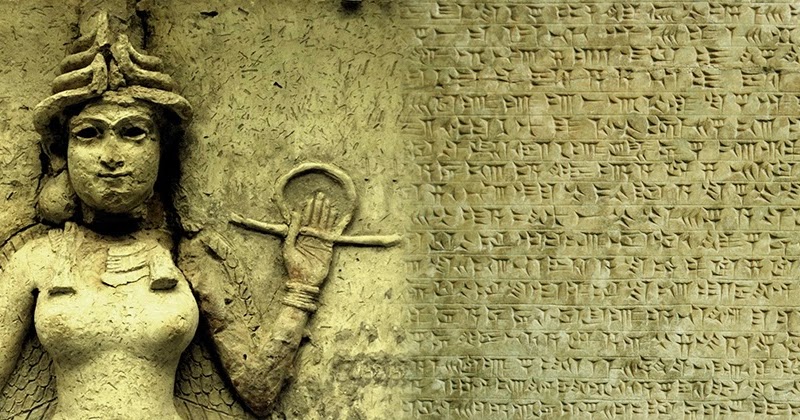
Christ and the Babylonians
 |
Monday, July 09, 2018
Suetonius and Jesus
I have long been prejudiced against the Romans, but am glad I finally broke down and read the Roman historian (or biographer) Suetonius. And not only because he confirms my prejudice! (Though that is always welcome.)
Friday, July 06, 2018
The 30 best movies ever!

It is an indictment of modern civilization that it deems movies like Elmer Gantry among its best. Bullfeathers. Who ever wanted to watch Elmer Gantry again? That's the test. Either that, or you are so haunted by one viewing that you don't DARE watch the film twice.
Here are my top 30.
Saturday, May 19, 2018
Hector Avalos vs. Jesus, Round IV

Friday, May 18, 2018
Richard Carrier and Germs
Sometimes it takes me a while, but reading the Mark passage about washing hands this morning on the roof of my apartment, it suddenly occurred to me how I should have answered Richard Carrier's challenge (and on-line argument) on this subject, several years ago when we debated in Huntsville, Alabama.
Saturday, May 12, 2018
Mom and the Bible
The Stream just published a short piece I wrote about Mom and the Bible -- right before Mother's Day! Happy Mothers' Day to those of you who are. It made me think about the sort of legacy I would like to leave to my children -- I'm afraid I haven't measured up to my own parents on this score.
Sunday, May 06, 2018
"Marshall is a Cowardly, Moronic Atheist."
Those of us who are Christians should care deeply about truth.
Friday, March 23, 2018
That evil Bible, again.
 |
Neither do car repair manuals usually mention the
Makah Indians or totem poles. What could they
possibly be for?
|

As in most memes, inanity and error battle for supremacy here.
Saturday, March 03, 2018
"Great Philosophers" on Sex: A Parade of Lunatics
I often tell students to read original sources. Hear for yourself from people of a different time and way of thinking. Every historian is not just a bridge from the past to the present, she is also a pair of gates on either end of that bridge, filtering traffic across it: limiting that traffic first by what the historian has noticed, and second by what she wishes you to notice.
An anthology broadens those gates, but does not knock them down. Works are selected for a reason, but they let you meet the original writers more directly than a few quotes in a history book. Still, the value of an anthology depends in part on whether you can trust the anthologist to select representatively and fairly.
In History of Ideas on Women: A Source Book, Dr. Rosemary Agonito helpfully offers us the very words many "great thinkers" in the western tradition have written on women. She seems to think she traces a forward trajectory of history, from the "bad old days" when Christian theology trapped women in misogyny and contempt, fitfully towards a more enlightened state, ending with the United Nations Declaration on the Rights of Women. (However badly that document may be ignored.)
But the story Agonito thinks she shows is not what the selections she offers actually give. A sounder conclusion is that the Christian tradition provides the only basis for sane reform and liberation for both sexes. Because this is an anthology, Agonito cannot lie about the Christian tradition (as some of those she anthologizes do), she can only selectively misrepresent. But even so, the Christian thinkers here come off as far more reasonable than the lunatics we have been taught to call "great thinkers," whom I will mainly quote and analyze below: Plato, Aristotle, Augustine, Aquinas, Bacon, Hobbes, Locke, Rousseau, Hume, Kant, Wollstonecraft, Hegel, Kierkegaard, Schopenhauer (whose insanity we have already chronicled), Emerson, Mill (ditto), Darwin, Nietzsche, Engels, Russell, Freud, De Beauvoir, Friedan, Marcuse.
What is startling is just how childish the "big thinkers" often seem to become, after they have rejected Christian orthodoxy."
Subscribe to:
Posts (Atom)