Pages

Showing posts with label books. Show all posts

Monday, August 01, 2022

Aslan is Loose!


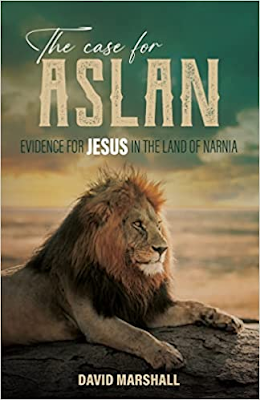
Good morning! You can now purchase The Case for Aslan: Evidence for Jesus in the Land of Narnia, on Amazon!


I think you'll enjoy this book! Everyone else has so far. (See reviews below.)

The Case for Aslan does not, as some guess, merely say the obvious, that "Aslan is Jesus." Instead, first I argue that Lewis' critics (Pullman, JK Rowling, John Haldane, even JRR Tolkien) are wrong: Lewis' imaginative worlds are beautiful, morally sound, and appeal to the mind that searches for truth.

More importantly, The Case for Aslan is a case for Jesus. In some ways, it is my broadest "Case for Christ" so far. But readers to date also agree that it makes also fun reading -- among others, Puddleglum and Pascal, Dr. Digory Kirke on a flight to "CHAZ International Airport" seated next to Philip Pullman, and (what Lewis sort of asked me to write) how Susan Pevensie finally found Jesus, a story which involves Bart Ehrman and Professor Kirke at his office in Wadham College.

Please get a copy on Amazon, and tell people what you think! It would be great to see some thoughtful reviews up. Criticize anything you think I get wrong! My only request is that you make the major theme of the book clear -- some people don't realize how serious, and deep, light-hearted fun of Lewis' sort can be. But warning: like the Wood Between the Worlds, the Case for Aslan can take you anywhere.

My first interview was a three-part series with Justin Brierley, to be posted later this month on his C. S. Lewis podcast. I would love to visit your church or field questions on your podcast over the coming months.

I also hope some people will like the book enough to want to pass extra copies around. Christmas is coming! And I think this book would work well for a book club or group study. I'll let people know when they can order it directly, with group discounts. As for Kindle, DeWard likes people to purchase physical copies, so Aslan can greet them at the coffee table, then make the electronic version available much later.

Here are the first two reviews, and the Amazon link.

"In this fun, breezy, kaleidoscopic book, apologist David Marshall puts Lewis into dialogue with everyone from Plato, Pascal, and Plantinga to the intelligent design theorists to the new atheists. While staying true to the spirit and wonder of Narnia, Marshall helps his readers to see the implications that Lewis’s Chronicles have for philosophy, theology, ethics, and science."

Louis Markos, Professor in English and Scholar in Residence, Houston Baptist University; author of On the Shoulders of Hobbits: The Road to Virtue with Tolkien and Lewis.

"A wonderful exploration of the deeper meaning of Narnia. Beautiful, imaginative, and deeply personal. Anyone interested in the relevance of C.S. Lewis for today will find this book worthwhile.”

—John G West, editor, The Magician’s Twin: C. S. Lewis on Science, Scientism, and Society

https://www.amazon.com/Case-Aslan-Evidence-Jesus-Narnia/dp/1947929216/?_encoding=UTF8&pd_rd_w=Wsi6A&content-id=amzn1.sym.5fe95cd4-8512-42fa-bf21-63d83b898785&pf_rd_p=5fe95cd4-8512-42fa-bf21-63d83b898785&pf_rd_r=1YVR01J3QZXZ2S5HYP5K&pd_rd_wg=scIZ8&pd_rd_r=1a8538ca-279a-4d3d-9a31-575911f129e0&ref_=pd_gw_ci_mcx_mr_hp_atf_m

Friday, December 08, 2017

The 100 Best Christian Books Ever!

What are the 100 best / most insightful / most important Christian books ever written? I googled "great Christian books" and found no great answers.

First I wrote my own preliminary list of 75 or so.  Then I asked for input from the people at Christian Apologetics Alliance, grabbed some good suggestions from the list Brad Cooper discovered at Church News (some of which I had thought of, but wanted independent confirmation before I bit down), and the following list emerged.  Sorry if I didn't include your suggestion: "So little space, so many books," to paraphrase one of the truest bumper stickers that ever cushioned a rear-end collision.  Even so, no doubt I have overlooked many brilliant works: that's what the comment section is for, to educate the present blogger.  (I'd love to dig into Christian bookshelves in Africa, Korea, Eastern Europe, India, or other neglected portions of the globe to see what great literature has emerged.  And there are some books here I haven't read yet.)

I begin with the obvious top choice, then follow in order of the author's last name.

(1) The Holy Bible. ("Author disputed."  Taken as a single volume, and I would make this choice even if I were NOT a Christian, I think.)
(2) Brother Andrew, God's Smuggler
(3) Anselm, Cur Deus Homo / Prayers and Meditations
(4) Aquinas, Summa Theologiae.
(5) Athanasius, On the Incarnation of the Word
(6) Augustine, City of God.
(7) Augustine, Confessions.
(8) Barth, Church Dogmatics
(9) Bede, Ecclesiastical History
(10) Bonhoeffer, The Cost of Discipleship
(11) Boswell, Life of Johnson
(12) Brand, Pain: The Gift No One Wants
(13) Bronte, Charlotte, Jane Eyre
(14) Brooks, Who Really Cares?
(15) Bunyan, Pilgrim's Progress.
(16) Burke, Notes on the Revolution in France
(17) Butler, The Analogy of Religion
(18) Cahill, How the Irish Saved Civilization
(19) Campolo, The Power Delusion
(20) Chaucer, Canterbury Tales.
(21) Clement of Alexandria, Stromata.
(22) Chesterton, Orthodoxy
(23) . . . , Everlasting Man
(24) Coles, Children of Crisis
Image result for christmas carol(25) Colson, Kingdoms in Conflict / Loving God
(26) Dante, Divine Comedy
(27) Defoe, Robinson Crusoe
(28) Dickens, Tale of Two Cities
(29) . . . Christmas Carol
(30) Donne (poems)
(31) Dostoevsky, The Brothers Karamazov
(32) Dream of the Rood. (Author unknown.)
(33) Ellul, Propaganda
(34) Eusebius, Church History
(35) Farquhar, Crown of Hinduism
(36) Fletcher, The Barbarian Conversion: From Paganism to Christianity.
(37) Golding, Lord of the Flies
(38) Greene, The Power and the Glory
(39) Grimm Fairy Tales.
(40) Kuhn, By Searching
(41) Girard, The Scapegoat
(42) Goforth, Goforth of China
(43) Herbert, Complete English Poems
(44)  Hopkins (poems)
(45) Hugo, Les Miserables
(46)  Irving, A Prayer for Owen Meany
(47) Kierkegaard, Fear and Trembling
(48) Julian, Revelations of Divine Love
(49) Justin, Dialogue With Trypho
(50) Lawrence, The Practice of the Presence of God
(51) Legge, James: The Religions of China: Confucianism and Taoism Described and Compared with Christianity
(52) Lewis, Mere Christianity
(53) . . .  Abolition of Man
(54)  . . .  Four Loves
(55) . . . , Till We Have Faces
(56) . . . , Chronicles of Narnia
(57) . . . , Surprised by Joy
(58) . . . , Screwtape Letters
(59) Lin Yutang, From Pagan to Christian
(60) Locke, A Letter Concerning Toleration
(61) Macdonald, Phantastes
(62) Mangalwadi, Book of the Millennia
(63) Milton, Paradise Lost
(64) Murphy, The Owl, The Raven, and the Dove: The Religious Meaning of the Grimm's Magic Fairy Tales
(65) Newman, Apologia
(66) Origen, Contra Celsus
(67) Otto, Idea of the Holy
(68)  Packer, Knowing God
(69) Paley, A View of the Evidences of Christianity
(70) Pascal, Pensees
(71) Peck, The People of the Lie
(72) Percy, Lost in the Cosmos
(73)  Plantinga, Warranted Christian Belief
(74) Ricci, The Truth about the Lord of Heaven
(75) Richardson, Peace Child
(76) . . . , Eternity in Their Hearts
(77) . . . , Lords of the Earth
(78) Ritchie, Spirit of the Rainforest
(79) Satyavrata, God Has Not Left Himself Without a Witness
(80) Schaeffer, He is There and He is not Silent
(81) Solzhenitsyn, One Day in the Life of Ivan Ivanovich
(82) . . . , Gulag Archipelago (I regard The First Circle as his greatest novel, but it contains little Christian content . . . maybe at the end.)
(83) Stark, For the Glory of God
(84) . . . , Discovery of God 
(85)   Stott, The Cross of Christ
(86) Stowe, Uncle Tom's Cabin
(87) Ten Boom, The Hiding Place
(88) Tolkien, Lord of the Rings.
(89) Tolstoy, Death of Ivan Ivanov (War and Peace and Anna Karenina are greater, but less Christian)
(90) Tozer, The Pursuit of Holiness
(91) Underhill, Mysticism
(92)  Warren, The Purpose-Driven Life
(93)  Weil, The Need for Roots
(94)  Wesley, Journal
(95)  Wilberforce, A Practical View of Christianity
(96)  Williams, Descent of the Dove
(97) Wright, The Resurrection of the Son of God (or the series)
(98) Wurmbrand, In God's Underground
(99) Yuan, 神州 (China's Confession)

(100) Silence?  Tristam Shandy?  Wrinkle in Time?  You choose.


Tuesday, February 21, 2017

The 100 Best Books?

This morning I ran across a Newsweek list of the supposed 100 best books ever, which they obtained in 2009 by crunching the numbers from several Top Ten lists. 

Don't get me wrong, some of the books placed here do belong.  But others emphatically do not, or probably on any reasonable Top-1000 list.  And all kinds of books which are not merely good, but great, world-changing even, have been left out. 

Wednesday, February 01, 2017

On the Literacy of Richard Carrier

Image result for hulk incredibleIn my recent book, Jesus is No Myth: The Fingerprints of God on the Gospels, I offer a series of arguments for the truth of the first four books of the New Testament that everyone seems to agree are pretty novel.  Craig Blomberg, Distinguished Professor of New Testament at Denver Seminary, credits me with "a rare combination of forms of expertise," adding that "support for the credibility of Christianity can be found here that is available nowhere else."  Tim McGrew, head of the Department of Philosophy at Western Michigan, who may know as much about the history of Christian argumentation as anyone alive, wrote of the book's "fresh insights, penetrating analysis, and dry wit."

My first hostile reviewer seems to agree -- on the originality of the book, at least!  

Friday, December 30, 2016

A Wind in the House of Islam

I am presently reading a book called A Wind in the House of Islam. The book describes something new in the world: after 13 centuries without any large groups of Muslims turning to Christ (aside from two towards the very end), in recent years dozens such movements have sprung up, in all parts of the Muslim world.
One important fact I have learned from this book, is that the Fulfillment Model of how Christianity relates to world traditions, which I developed for my doctorate and in some of my books, also applies to Islam and even the Quran. I resisted that conclusion until this morning. How Jesus Passes the Outsider Test: the Inside Story, for instance, focused on Hebrew, Greek, Norse, Indian, and Chinese traditions. I ignored Islam because: (a) Mohammed was, in my view (still) an unusually bad man; (b) he wrote the Quran, whatever Muslims claim; (c) it's not a very good book, sorry again Muslims; (d) if the Quran can lead people to Christ, why hasn't it?
But it turns out that it is doing just that, right now:
"First we show them from the Quran that only Isa al-Masih is the Savior, and then we baptize them. Then we give them the Bible and we disciple them. Over time, they move away from the Quran and into the Bible, though they continue to use the Quran to bring other Muslims to faith in Isa."
That's from a "Muslim" leader in Bangladesh, who himself became a Christian when someone asked him why he was reading the Koran in Arabic without understanding it, and he began to read what it really said -- more than he dreamed about Jesus.
So I'm going to have to disagree with my friend Don Richardson on this. I still think Mohammed was a bum, and the Quran isn't much of a book, as holy scriptures go. But apparently God is (if I can put it this way) more clever than I gave Him credit! It seems He has booby-trapped even a book of heresy to point true seekers to His Son.
Anyway, interesting book, you might like it. Probably better not let too many ISIS terrorists get ahold of the book, though.

Friday, November 25, 2016

"Back to the Sources!" Wallace Marshall reviews Jesus is No Myth.

Dr. Wallace Marshall (no relation) has just posted the following review of my new book, Jesus is No Myth: The Fingerprints of God on the Gospels, on Amazon:

"A Great Contribution to Historical Jesus Studies!"

"This is a well researched and highly readable book. It's clear that Marshall has spent a lot of time with the original sources. He makes a compelling case for the uniqueness of both the historical Jesus and the canonical Gospels, and lays waste the arguments of "mythicists" like Richard Carrier who argue that Jesus may have never even existed.

"Marshall particularly excels in calling attention to the stylistic and literary qualities of the Gospels. He shows how understated their narratives are, vs. the dramatic embellishment, often to a hilarious degree, of their supposed parallels; how the personality of Jesus appears distinctively from the voice of his biographers, like Samuel Johnson's does in Boswell's famous "Life"; how the personalities of numerous minor characters, usually ordinary people, stand out in the Gospels as well, whereas they are rarely noticed in other ancient sources, and where they are, function for the most part like stage props; how unlike Jesus' character, teachings and interactions are from the ethno- and ego-centricity that predominates the alleged parallels to the Gospels.

"The chapter on Apollonius of Tyana, the favorite parallel to Jesus, is an absolute gem. Apollonius doesn't dialogue; he monologues. His moral teaching consists of platitudes. He doesn't really even work miracles, and where he "sort of" does, it is usually bizarre, and sometimes dark, as when Apollonius instructs the people of Ephesus to stone a beggar, who bloodied and broken reveals himself to be a demon. As for the source document itself, his life, written by Philostratus, contains fantastical details like flying, gold-gathering griffins, apes who farm and harvest peppers, 400-year-old elephants who shoot arrows with their trunks, and of course---dragons.

"By the time Marshall finishes his tour, you find yourself wondering how it could have ever occurred to scholars that either Philostratus' work, or his subject, Apollonius, could have been identified as legitimate parallels to the historical Jesus and the Gospels, and especially the Synoptics (Matthew, Mark and Luke). You wonder the same thing after the chapter on "In Praise of Baal Shem Tov," the eighteenth-century Polish rabbi who's recently been brought forward as a contestant on what Marshall amusingly calls "Celebrity Apprentice Messiah" (262). And indeed, a point Marshall returns to again and again---and it's difficult to disagree with it after reading his book---is this: "It is stunning that such are the closest parallels skeptics can find, after so epic a canvassing of ancient records" (214). He thinks skeptics have actually paid a tremendous compliment to Christianity by unwittingly underscoring this point.

"But the "compliment" only emerges clearly when one turns from the modern presentations of these ancient sources/figures, to the sources themselves. Marshall shows how scholars like Matthew Ferguson and even Bart Ehrman (who comes in for a particularly sharp rebuke on p. 204) have been guilty of gross misrepresentation. But it's impossible to do justice do this book in a review. The strength of "Jesus is No Myth" (which establishes far more than that bare historical fact) emerges from its wealth of comparative details and the insightful analysis Marshall applies to them. I went away from this book freshly reminded of the importance of the maxim, "Ad Fontes."

Now you know what you want to get your son or daughter off to college, or skeptical uncle, for Christmas! 


Order the book directly, and you can not only buy the book for $6 off, I'll also sign it, if you remind me:

David Marshall / PO BOX 403 Fall City WA 98024 ($16 per book, plus $4 postage for any number of copies)


Or, of course, there's still plenty of time to get Jesus is No Myth from Amazon.  


Thursday, September 22, 2016

October Speaking Schedule

Lots of speaking coming up!  Come if you can!  Bring along those who have doubts about the truth of the gospels, who have swallowed bilge from the likes of Bart Ehrman, Richard Carrier, or Reza Aslan, or friends who would like to hear something important from a novel perspective. 

The initial tour for my new book, Jesus is No Myth: The Fingerprints of God on the Gospels, is set to kick off in full fury early next month. I'm planning to travel to some 20 states during October, speaking in (at least) Washington, North Dakota, Minnesota (probably), Ohio, Pennsylvania, New Jersey, and South Carolina.  (Then into the South in November.)  Almost all of these events are open to the public!  I'll be pleased to meet some of you before or after, get a bite to eat, sign books, and chat.   

I'm also planning to visit top universities along the way, which I'll list below the schedule.  Since I'm going to these schools anyway to conduct research, I'd also love to share on campus, even to small groups on a last-minute basis, regardless of funds.  I probably won't pass up a meal if invited!  (I am also looking for places to stay some nights.) 


"Jesus is No Myth" Tour, October, 2016


October 2  (Sunday, 9 AM + 11 AM sermons)
        
             Washington State, Snoqualmie Valley Alliance (Fall City): "Understanding Taoism"


October 8 (Sat, 5:30 PM sermon)


              North Dakota, First Lutheran (Minot): "Jesus is No Myth!"


October 9 (Sunday, 8:30 + 11 AM sermons)

               North Dakota, First Lutheran: "Jesus is No Myth!"


                  (9:45 Adult Ed)


                ND, Minot First Lutheran:   "The Fingerprints of God on the Gospels"


                  (7-8:30?)                             
      
                 ND, Minot First Lutheran:   "How Jesus Passes the Outsider Test"


October 10 (Monday class)


                  Minnesota (tentative, private)


October 12 (Wed, 6-7:40 PM)   


                  Ohio, Maumee Presbyterian: "The Fingerprints of God on the Gospels"


October 16 (Sunday, 9 + 10:30 AM sermons)


                  Pennsylvania, Christian Life Center (New London): "Is Jesus a Myth?"


October 17 (Mon, PM)


                  New Jersey (Randolf): Perspectives


October 19  (Wed, PM)


                   Pennsylvania, Christian Life Center (New London): "How Jesus Passes the Outsider
                      Test"


October 22 (Sat, 9 AM)


                   Pennsylvania, Christian Life Center (New London): "Jesus for Skeptics"


                    (Sat, 10:30 AM)


                                                                                              "Apologetics in the 21st Century"


October 23 (Sunday, 9 + 10:30 AM)


                    Pennsylvania, Levittown Presbyterian: "Jesus is No Myth!"


                    (Sunday, after second service)


                     Pennsylvania, Levittown Presbyterian: Q & A


October 30 (Sunday, 9:30-10:15)


                     South Carolina, St. Philips Church (Charleston): "Is Jesus a Myth?"


                    (Sunday, 4-5:30)


                      South Carolina, Reasonable Faith, "Is Jesus a Myth?"


Schools to Visit Along the Way


(speak, chat, survey, meet, photograph):


Amherst, Boston, Brown, Carleton, Chicago, Colgate, Columbia, Cornell, Dartmouth, Duke, Emory, Georgetown, Georgia Tech, Harvard, Haverford, Illinois, Lafayette, Lehigh, Michigan, MIT, Northwestern, Notre Dame, Ohio State, Penn State, Princeton, Purdue, Tufts, Vanderbilt, Washington and Lee, Whitman, Williams, Wisconsin, Yale.


Hope to see many of you in one or another of these locations! 

Monday, September 19, 2016

Jesus is No Myth: Deal for Students!

Image may contain: natureThis past year I have heard reports of several people, including college students, being fooled into doubting the gospels by the wiles of liberal New Testament scholar Bart Ehrman and his ilk. I really hate it when college professors abuse their superior knowledge and prestige to hoodwink young people, as I believe Ehrman is doing.  That is one reason I feel so passionate about my new book, Jesus is No Myth: The Fingerprints of God on the Gospels. I would love to get that book into the hands of questioning students. 


So for this month, I want to make Jesus is No Myth available to students at my own cost.

Whoever would like to purchase copies of this new 300-page book for yourself, if you are a student, or wish to give it to students, you can have it for just $10, plus $4 shipping. ($1 shipping for each additional copy.) I can post the new book on those terms until I leave on the fall speaking tour in two weeks.
Jesus is No Myth offers the following:


(a) It refutes Reza Aslan, Richard Carrier, Bart Ehrman (ACE), and Matthew Ferguson.

(b) It describes 30 traits that the gospels share (the "fingerprints of God"), which directly demonstrate that the gospels are highly credible historical works. It defends established "criteria" like Embarrassment, Coherence and Multiplicity against skeptical attacks.  It describes revolutionary new criteria introduced by NT Wright and Tim and Lydia McGrew.  It then introduces some twenty other powerful criteria having to do with setting, characterization, style, moral teaching, miracles, and the fulfillment motif.

(c) The book plays "judo" on the skeptics.  It makes use of the long skeptical search for "Jesus body doubles," for parallels to the gospels or the historical Jesus. It rigorously analyzes many suggested parallels, arguing that nothing at all like the real gospels has yet been found, cheerfully mocking supposed analogies like Apollonius of Tyana, Baal Shem Tov, and The Golden Ass.

(d) Finally, Jesus is No Myth looks at the "historical Jesus debate" briefly from the outside perspective of China.

 Reviews so far bear out that Jesus is No Myth achieves these goals, with style:
If you are a student, or have a student ministry, please consider purchasing some copies!

Our address, again, is Kuai Mu Press / PO BOX 403 / Fall City, WA, 98024. I usually ship the same day: the Fall City post office is just across a lazy side-street. The old deal for non-students, $16 plus $4 shipping with a copy of The Truth About Jesus and the 'Lost Gospels' for free, will also be valid for the rest of the month.

The book is listed on Amazon as "out of stock," though they should have copies by now.

Friday, May 20, 2016

Ten Greek Books (or collections) Worth Reading

What ancient non-canonical or non-Christian books give you the most valuable background to the New Testament, including by making you invulnerable to half the skeptical arguments out there? Here's my Top Ten list:
1. James Robinson's The Nag Hammadi Library. (Almost all the extant Gnostic works -- most of them boring as all get-out, but highly revealing. Read with Plato's Parable of the Cave.)
2. Bart Ehrman's al-Scripture collection, Lost Scriptures: Books That did not make it into the New Testament. (My disagreement begins with the first two words -- not having these books, which are not "Scriptures," in our Bible is no loss, really. But seeing their unsuitability for yourself is part of the value of the collection - and some are interesting in their own right.)

Wednesday, February 03, 2016

"Wealth, Women, and God" + "The Gospel Hidden in Chinese Characters"

In the past few days a couple books came in the mail for which I wrote a blurb and a forward, respectively.  If you're interested in the Gospel around the world, you may like to take a look.  

Yesterday arrived Wealth, Women & God, by Miriam Adeney and Sadiri Joy Tira.  Miriam, an anthropologist who teaches at Seattle Pacific University, has in the past been kind enough not only to write a generous blurb for my How Jesus Passes the Outsider Test, she also wrote a wonderful chapter for Faith Seeking Understanding, a deeply personal account of how the Gospel relates to other religious traditions.  So I was happy for the chance to read her book, and to recommend it to you.  (It should also come in handy on my next writing project, on How Jesus Liberates Women.):

"'Come, see a man who told me everything I did.  Can this be the Christ?'  An unnamed woman in the First Century asked that question.  Miriam Adeney and Sadiri Joy Tira show, through a series of deceptively simple stories, how women in the Middle East today are meeting Christ, then introducing him to others, just like that First Century seeker did.  To marginalized women Christ still offers living water, especially guest workers from the Philippines, Africa, and India.  This is happening in an improbable place: the wealthy, orthodox Muslim Arabian Peninsula.  Told with characteristic grace and understated insight, these accounts exude the warmth of testimonies shared around a fire on the last night of camp."  

Take a look if the topic interests you!

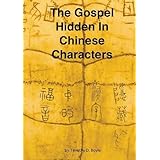
A week or two ago, a very different but equally fascinating book showed up in the post office across the road from our house.  This one was by Tim Boyle, whom I have never met personally, but corresponded with for some years.  The book is entitled The Gospel Hidden in Chinese Characters.  My forward explains what's inside, and why it's important: 

Product Details"According to the Book of Ecclesiastes, there is both a time to "cast away," and a time to "gather."   Indeed, science teaches us to seek truth not just by cutting up fact and discarding bad theories, but also by synthesizing converging truths.  Thus James Thrower, a scholar of religions, argues that one of the key tests of religious truth must be whether a given spiritual or secular model of how religions fit together, manages to explain, include, or even anticipate what is true in "rival" traditions or philosophies.  
 
"Since 635, when the Nestorian Christian Alopen arrived in the Chinese capital of modern Xian and was welcomed by the great Li Shimin, co-founded of the glorious Tang Dynasty (who wrote a "blurb" for the Christian books he brought), Christians in China have tried to meet this challenge by relating Christianity to Chinese tradition.  The "Nestorian stele" inscribed in 781, which tells Alopen's story, in fact touches on some of the very concepts you will find in this book.  A millennium later, French Jesuits and Chinese Christians noticed that Chinese characters themselves often carry theological connotations that fit remarkably well with the message of the Bible.  The Kang Xi emperor, educated in part by the Jesuits and equal to Li Shimin in greatness, listened with some exasperation to a Jesuit who found Christ throughout Chinese culture, and told him, in effect, "Your great learning is driving you mad."  
 
"Tim Boyle is not a madman.  Neither do I think is he engaged in a frivolous ink-blot type exercise in free association.  He has, I think, written the best modern book on how Christianity relates to Chinese characters -- more restrained, and based on more credible premises, than alternatives.  Of course the specifics can be questioned: Tim does not claim to be a professional linguist, and many interpretations are admittedly subjective.  Still, pour over the details, and prepare to be startled.  It appears as if the ancient Chinese culture that produced the very language shared today by one and a half billion people of the "Far East," cut off by tradition beliefs as well as by vast deserts and mountains, fits the biblical account rather like a hand in glove.  
 
"What is the proper explanation?  Did the ancient Chinese deliberately inscribe truths from Genesis, or else parallel traditions that they somehow preserved?  Or, as seems more likely to me, did God prepare the hearts of the Chinese from within their own culture, as Christians from St. Matthew to Augustine to Pascal to Plantinga have said He prepared the hearts of the Jews through the sacred scriptures of the Old Testament?  Or do these numerous, often detailed, parallels somehow reflect similar stages of two societies, both God-haunted, ancient peoples to whom truth was somehow manifest through creation?  
 
"Whichever theory you subscribe to, or even if you prefer to believe this is all a subjective figment of the imagination -- and Tim's argument is strongly suggestive, not compulsive -- I think most readers will find room for amazement here.   Symbols that Chinese and Japanese use every day, sacred for centuries also in Korea and Vietnam, stand up and point pretty clearly to Christ.  It is as if an American were to look at a quarter for the first time, and be surprised to find the words "In God we trust" on them.  Only the currency of these words is vastly more ancient, and arises in a "pagan" society that had never heard of the Bible.  Thus truth in far-removed cultures gathers together, East and West, to call us to praise God.  In the light of Christ, as Clement of Alexandria put it, broken fragments of truth, scattered within different 'pagan' schools, are joined and brought to life.  However you understand that process, here, surely, we can collect many of those fragments."

 
Dr. David Marshall, author, True Son of Heaven: How Jesus Fulfills the Chinese Culture; How Jesus Passes the Outsider Test: The Inside Story

Saturday, December 26, 2015

A Year with Great Old Books


Yes it has been.  That's partly because I don't watch much TV here, and practically no movies.  But I can order books for our department, and I did bring a bunch with me -- no, not Kindle, the heavy ones, good for the abs.  Also, since I'm writing a highly ambitious defense of the gospels, I felt obligated to read as much ancient Greek fiction and history as possible, to provide a basis for comparison and analysis. 

So I haven't read as much in Chinese as last year.  But I have found some wonderful and fascinating works -- also some solid duds. 

Here are the ones I remember:

Wednesday, November 18, 2015

Speaking of Hell -- is it hot in here?

Hell is not a pleasant subject.   Add to that the fact that I know almost nothing about it, and I have two good excuses not to talk about the subject, if I can help it. 

Now, though, our friend Hector Avalos has produced a book called The Bad Jesus in which he apparently argues that teaching on hell makes Jesus bad.  No, according to one friendly reviewer, it reveals Jesus as a "moral lunatic." 

I was foolish enough to challenge this fellow, Ben.  So now I can say "ben there, done that."  And yes, the temperature does seem to rise ever so slightly . . . Next time, shall we not and say we did?  But you know where liars go . . . No, not the campaign trail! 

Anyway, here's the review from Amazon, and some of the following exchange.  Those who know more about hell, feel free to correct any misunderstandings I display:

Monday, November 16, 2015

Christianity gets Jerry Coyne "monologuing"


(Note: originally posted on Amazon.)  A couple years ago, I debated the sociologist Phil Zuckerman in California on whether Secular Humanism or Christianity offered the greater hope for humanity. The church where the event was held did not immediately put the debate on-line as they had promised. Jerry Coyne wrote as follows:

"This is why this form of Christianity is inimical to democracy. I can’t imagine Zuckerman, myself, or any other debating atheist refusing to allow the debate to be aired—no matter how bad our performance was."

Friday, April 17, 2015

Another Wild, Unavailing Attack on my New Book

I am always amazed at the criticisms of my books that appear on-line.  So far, not a single review of any of them by atheists who were not professional academics, has shown any real understanding, or desire for understanding, of the book purportedly being reviewed.  (That includes four books so far.)  Three reviews have appeared by atheists who were academics, which came much closer to understanding (and were much more positive), but still fell somewhat short.  Probably the critical review that represented my views most accurately, was by a Youth Earth Creationist. 

Wednesday, April 01, 2015

My New Book: Classic or Crapola?‏

My new book, How Jesus Passes the Outsider Test: the Inside Story,  is drawing starkly contrasting reviews on Amazon so far.  ALL reviews to date have given it either five stars (the top rating) or just one (the lowest rating).   Furthermore, people who like the book seem to absolutely love it, comparing it to masterpieces like Mere Christianity and Orthodoxy.  Those who hate it, seem to loath it (and /or its author) with a passion. 
You will be shocked to learn that I prefer the first group.
The best way to decide who is right, is to read the book for yourself.  If you decide the critics are on-the-money, warn your neighbors and their dog away from it.  But if you find that How Jesus Passes the Outsider Test is anywhere near as good as most reviews have said so far (and not just on Amazon), then please help me get the word out!  This is very much a grass-roots campaign.
In this first post, I'll give the five positive reviews on Amazon, in chronological order.   (Another good review  was posted by Ratio Christi Vice President Tom Gilson, on the Thinking Christian blog, along with scholarly reviews, all warmly enthusiastic so far.)  In the second, I'll respond to those who say they loath the book.

Tuesday, January 27, 2015

Loftus Attacks! Part Uno

I’m getting the feeling that maybe John Loftus feels he didn’t do too well in our debate on Unbelievable.  (The first part of which can be found here, the second part should be posted this coming Saturday.)  How else to explain his multiple posts since then, first complaining that he didn’t get enough time, then attacking Randal Rauser (of all people), and then a series of three posts critiquing my book?

Well, great, after all these years, and many posts on both sides, John finally gets around to actually trying to rebut some of my arguments -- sort of. 

Tuesday, December 23, 2014

How Jesus Passes the Outsider Test on Kindle, Amazon!

How Jesus Passes the Outsider Test is now available on Amazon, or by direct order from us.  A Kindle version is also up now.  


All the feedback has been good, so far.  In addition to the rave reviews posted on this site a few blogs ago, the book was also recently endorsed by Dr.Win Corduan, author of one of my favorite books last year, In the Beginning God.  Win's endorsement seemed a little more guarded than the others so far ("an honest and personal display of why the gospel of Christ will not die out in a few more years, as atheists have predicted with their ephemeral arguments over many centuries"), but he also noted in his e-mail, "Your allusions to contemporary fads frequently had me in stitches."


For those of you who have recently endured surgery, then, this book might not aid in your recovery.  (Being in stitches already.)  But as a fellow lover of books, as objectively as I can say it, I think you will find the story this book tells fascinating and inspiring. 


And I will welcome any sincere attempts to correct any errors you think I have made in telling that remarkable story of how the Gospel passes the Outsider Test.